Imagine having served your country with courage and bravery for most of your life, but when it comes to reaping its benefits, you realize that most have gone to taxes.
That’s exactly what Puerto Rico Law 191 of 2024 is about. If you have served your country, you deserve to keep more of what you have earned. This is crucial as the average military retirement pay is around $2,857/month, which makes it about $34k per annum.
In simple terms, this law entirely exempts military pension income from Puerto Rico’s income tax. Thus, if you are a veteran or retired US Armed Forces member living on the island, your retirement income would no longer be taxed. This ensures you get to keep most of what you have earned for your services, allowing you to have a secure, tax-efficient retirement.
However, here is the catch. Several veterans are still not aware of this law’s existence. Or they have heard about it and are not sure if it applies to them. So, let’s find out who qualifies, what is covered, and how to make the most of it in 2026.
Why Many Veterans in Puerto Rico Are Still Overpaying Taxes on Their Military Pension
Retirement pay for militaries is taxed based on where they have served. For instance, if you have been serving for twenty years, with 15 years outside of Puerto Rico and 5 within, the federal government will tax over 75% of your income, while 25% would go to Puerto Rico. Such deductions would not be made once you sign up for these exemptions.
Even with Law 191 being functional for about two years now, many veterans preparing for efficient tax planning on the island are missing out on its benefits. It’s not really their fault since the tax rules around Puerto Rico’s military pensions can be quite confusing. Thus, let us help you navigate through it.
Confusion Between Federal and Puerto Rico Tax Rules
This is the point that becomes most confusing for people in the financial planning process: Puerto Rico has its own tax system. It is separate from the federal one. Thus, the rules that apply on the mainland do not always apply on the island.
While military pensions are generally subject to federal income tax, the residents of this island enjoy a unique status. They are typically exempt from federal income tax on earnings sourced from Puerto Rico. This is what already creates maximum confusion. Then, when Law 191 comes in, creating a Puerto Rico-level exemption, it suddenly makes things all the more complicated.
A lot of veterans end up paying more than they should simply because they are not aware. Many people are confused about how to mix various forms of retirement income and apply the wrong deduction laws to the wrong dollar amounts. These plans can understandably get quite complicated; thus, to make it simpler on your part, you can work with a professional financial advisor for better navigation.
Why Many Retirees Are Still Reporting Pension Contributions Incorrectly
Some federal employees opting for retirement in Puerto Rico are still reporting their full military pension as taxable income on their Puerto Rico return. One reason for this confusion is that not all tax preparers in Puerto Rico are current with the changes resulting from Law 191 (which was enacted in August of 2024), so if your tax preparer has not prepared a military pension since this date, then there is a good chance that they missed something.
Lack of Awareness About Law 191 of 2024
Rephrasing the military person’s laws into social networking: Simple explanation, many veterans do not know that the law exists, and the people who know about it and haven’t told anyone else are too few to keep this information to themselves. Veteran organizations know nothing about all of this until much later because of what is currently being published in the news or through other media.
As a result, many veterans filed their tax returns before realizing that they had a full or partial exemption on some (if not most) of their income tax obligation, and as a result, they will not be entitled to any refund because they missed claiming several tax deductions.
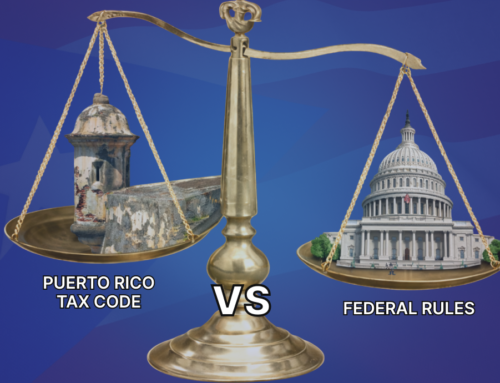
Read Also: Puerto Rico Tax Code Vs. Federal Rules: Guide to Retirement Plan
What Puerto Rico Law 191 of 2024 Actually Changed
Before Law 191, pension income for veterans was not fully protected from the island’s income tax. Although veterans did have some exemptions available, it was nothing comprehensive. This law has entirely changed that.
The 100% Exemption on Military Retirement Pension Contributions
At the heart of Law 191 is a straightforward concept. It provides a complete, 100% exemption for eligible veteran or active duty members of the U.S. Armed Forces residing in Puerto Rico from the tax on military pensions. Not a deduction; not a partial credit; but a total exemption. So if you’re receiving only military pension income for retirement, you’ll have no Puerto Rico income tax liability on that income.
For example, if you’re receiving $2,000, $3,000, or even $5,000 a month from your military retirement, you are saving a good deal of money each year by avoiding taxes on that income.
Additionally, the law preserved the existing $1,500 personal exemption available to veteran taxpayers. Therefore, the tax benefits to veteran taxpayers are two-fold:
- 100% exemption from pension taxes
- The existing personal exemption.
Why the Puerto Rico Government Approved This Law
It wasn’t random for Puerto Rico to do this. They had a purpose to begin with.
The island has been losing residents for multiple years. Young individuals relocate to the mainland in search of employment opportunities. Families move elsewhere. Each person moving means a decreased tax base.
The population of Puerto Rico can be increased by providing a stable group of individuals who are most often financially secure, involved in their communities, and involved in their local governments through attracting veterans. Veterans returning home to the islands can be provided with tangible benefits as a way of recognizing and appreciating their service. Law 191 serves both as a form of appreciation to those who served in the military and a sound public policy choice.
The Economic Impact of Attracting Veterans Back to the Island
When looking at the full picture, it makes sense why the numbers are so positive for veterans who are relocating to Puerto Rico. Not only do veterans receive their monthly payment when they relocate, but they also purchase a house, often start a small business, explore their new surroundings, and give back to the communities they have relocated to. All these things would not be captured by looking only at tax returns.
Puerto Rico’s recent elimination of tax on military pension income has made it very clear to the men and women who served that they are valued members of the island community. The actions of several states in the US over the past two years regarding the tax treatment of military pensions are directly correlated with the increase in veteran migrations into their states and increased economic activity associated with the veteran community.
As such, Puerto Rico is now eligible for consideration along with the states above as places where veterans will consider retiring.
Who Qualifies for the Military Pension Exemption in Puerto Rico
Regardless, it is important to note that not every veteran qualifies automatically for the benefits. Here are the specific requirements you need to qualify for them:
Definition of a bona fide Puerto Rico Resident
To claim the exemption, you would first have to be a bona fide resident of the island. This means,
- You have to reside on the island for at least 183 days a year
- Puerto Rico has to be your permanent home and not a vacation property or a second residence
- You will need to have clear, established ties to the island. This includes having local accounts, a driver’s license of the island, voter registration, etc.
- Proof that you are not claiming residency in another US state at the same time.
Residency is a serious part of this island, as considered by the IRS and the Puerto Rico Treasury Department. Thus, owning a property here is simply not enough to qualify for the rewards.
Retired Military Personnel Eligible Under the Law
The exemption applies to:
- Veterans as defined under Puerto Rico’s Veteran’s Bill of Rights
- Retired members of the US Armed Forces. This includes the Army, Navy, Air Force, Marine Corps, Coast Guard, and Space Force
- Reservists and National Guard members receive retirement pay, provided they meet residency requirements.
Situations where the exemptions may not apply:
- Not being a bona fide resident of the island
- When your retirement income comes from a source other than a military pension, like a federal civilian pension, it receives different treatment.
- If you receive disability pay that is already exempt under separate rules, double-dipping exemptions are not allowed.
- Your tax files are under the wrong classification.
These rules can often seem confusing and overwhelming. Thus, whenever in doubt, look for qualified financial advisors in Puerto Rico who will help you navigate the right way.
The $1,500 Veteran Tax Benefit and How It Works
Although Law 191 is more popular, there are other benefits that often go unnoticed. Veterans in Puerto Rico are also entitled to an additional $1,500 personal exemption, and many people are not even aware of it.
Understanding the Additional Veteran Deduction
The $1500 deduction exists from before Law 191 came. It is an additional personal exemption available specifically to veterans. This works by reducing your taxable income by $1,500 in addition to the personal exemption available for everyone.
It may not seem like a huge number in itself. However, when combined with pension exemption in its entirety, it adds one more layer of tax relief that veterans can easily claim.
How It Differs From the Pension Contribution Exemption
These are two separate benefits, and it is worth understanding how they differ from each other.
| Features | $1,500 Veteran Exemption | Law 191 Pension Exemption |
| What it Does | Reduces your taxable income overall | Completely excludes military pension from taxes |
| Type of Benefit | Personal deduction | Full income exclusion |
| What income does it apply to | Any income | Military retirement pay only |
| Can you claim both? | yes | Yes |
You may imagine the Law 191 exemption as a big benefit, while the $1,500 can be an additional bonus.
Read Also: Why Disconnected Financial Planning Costs Puerto Ricans More
Documents Veterans Need to Claim the Exemption
Getting the exemption approved is not merely about knowing if you qualify. You also need to have your paperwork cleared. Thus, here is what you gather before you file.
Why Your DD214 Is Important
Your DD214 or the Certificate of Release or Discharge from Active Duty is the most important document. It is your primary proof of military service, thus, one of the crucial documents a veteran can have. You need to keep it ready, as it may come up in more situations than necessary.
To comply with Law 191, you must prove that you meet the requirements of being a qualified veteran or retired military person. You may be able to get a replacement from either the National Archives or the Defense Finance and Accounting Service (DFAS). You should not wait until tax time to do this.
Understanding the 1099-R Form for Military Retirement Income
You should get a 1099-R form every year if you receive military retirement pay from DFAS. This is the form that will report to you and your tax preparer about the retirement income you received, and it will be the same form that your tax preparer will use to prepare your taxes.
Here are a couple of things to keep in mind regarding the 1099-R:
The following summarizes how payments from a 1099-R are reported to you on your 1099-R form.
- Box 1 will note the gross amount of the retirement payment that has been received (the total amount of retirement funds distributed).
- Box 2a will show the amount of taxable retirement income that you will report when claiming the exemption under Law 191.
- Box 7 will have a unique distribution code that describes the type of retirement payment as determined by the retirement plan administrator.
You should talk with your tax preparer about the fact that income reported on Form 1099-R is exempt from taxation under Law 191.
Other Documentation That May Be Requested
Depending on your situation, the Puerto Rico Treasury or your tax advisor may also ask for:
- Proof of Puerto Rico residency. This includes utility bills, lease agreements, or mortgage documents
- Your Puerto Rico driver’s license or government-issued ID
- Voter registration or any other official document that ties you to the island
- Prior year tax returns, especially if you recently relocated to Puerto Rico
- Military retirement award letter, which shows your monthly benefit amount.
Having these documents ready ahead of time makes the filing process a lot smoother.
Common Mistakes Veterans Make When Reporting Military Retirement Income
Since the rules can be quite confusing, veterans without qualified advisors often make certain mistakes that can easily be avoided with careful processing. Here are some of the top mistakes people often make while planning a tax-efficient retirement in Puerto Rico:
Reporting Pension Income Incorrectly
- Report the entire gross pension as taxable, even though it is supposed to be tax-free
- Confusing military retirement pay with other types of retirement payments
- Using incorrect numbers from the 1099-R form to report on the tax return.
Missing Available Tax Exemptions
- Not claiming the Law 191 exemption at all or being entirely unaware of it.
- Missing out on the $1,500 exemption as well
- Assuming your financial advisor knows about these exemptions without properly clarifying first.
Filing Without Understanding Puerto Rico Tax Law
This is a major difference between Puerto Rico’s and the federal tax systems. Veterans who recently relocated to the island file their returns using the same assumptions as if they were still on the mainland, leading to potential errors and incorrect returns.
If your tax preparer does not specifically have experience in preparing military pension tax returns for Puerto Rican residents, it’s worth looking for someone who has. A single mistake in your tax return could easily exceed the cost of hiring a knowledgeable preparer.
Read Also: Wealth Protection in Puerto Rico: Asset Protection Plans That Work
Financial Planning Considerations for Veterans Living in Puerto Rico
Law 191 does not just help you save on taxes. It opens doors to smarter, long-term retirement planning. With your military pension now exempt from any charges, your overall tax planning picture looks different. Your income no longer counts against you. This means you have the option to make room for other sources like rental, part-time work, and investments. The best part? None of it pushes you into a higher tax bracket.
Here are some additional things worth considering:
Opportunities for Tax-Efficient Retirement Planning
Tax-efficient retirement options can be available in Puerto Rico due to many existing tax incentives. The combination of the Law 191 exemption with existing tax incentives will create even more potential for significant savings through the tax-deferred accumulation available. Some ways to create substantial savings through tax-advantaged accumulation in Puerto Rico include:
- Make maximum annual contributions to tax-advantaged accounts (Traditional IRA or TSP).
- Plan and execute the periodic withdrawal of funds from tax-advantaged accounts at strategic times.
- Work with a financial advisor who knows both U.S. federal and Puerto Rican tax laws.
Coordinating Pension Income With Other Investments
Consider using your pension income as the foundation upon which to base your retirement planning and structuring your future investments accordingly, rather than structuring your future investments and then trying to build a pension around those.
Final Thoughts
Puerto Rico’s Law 191 can be very helpful, but only if you know how to use it properly. The details of using the exemption properly and developing a better retirement strategy are essential to plan a financially sustainable retirement.
JLA Financial Planning can help veterans in Puerto Rico with those plans, and they also provide financial planning for business owners. Our financial strategies are built with consideration of your needs and are customized to your immediate and personal goals.