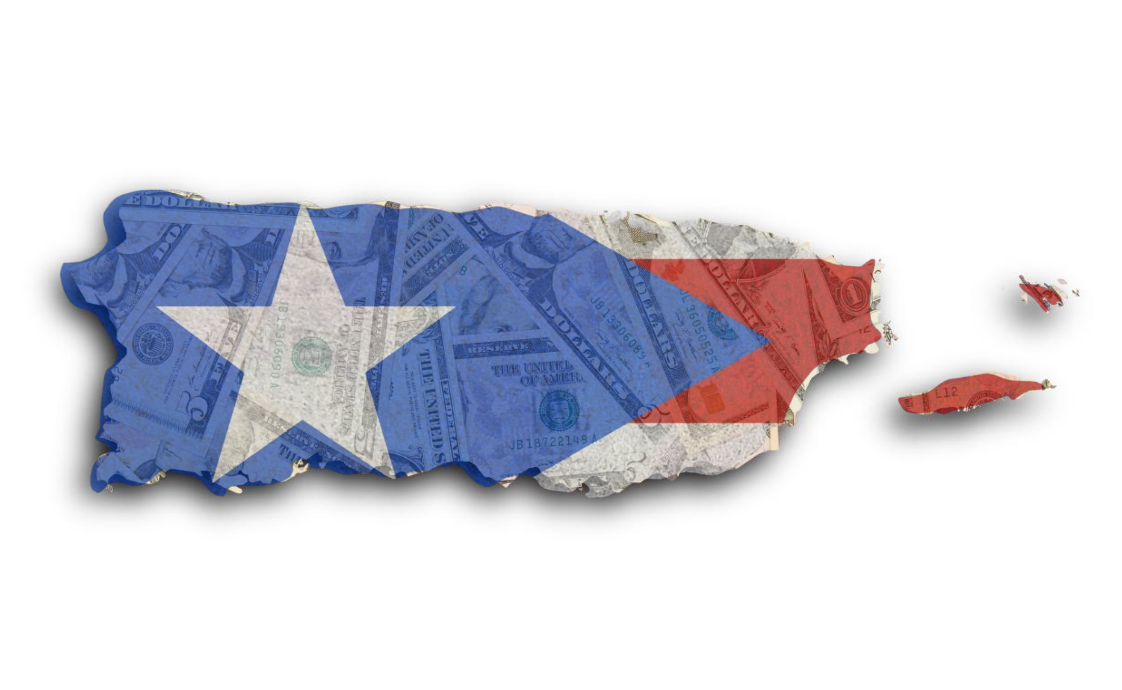
Many federal retirees assume that moving back to Puerto Rico automatically shields their income from federal taxes. However, that assumption is only partly true, and the exception matters enormously for anyone receiving a FERS or CSRS pension. In fact, a federal pension follows different rules than nearly every other type of income a bona fide Puerto Rico resident receives. Therefore, understanding exactly how this works before relocating prevents a costly surprise at tax time.
The Rule Most Retirees Get Wrong
Section 933 generally allows bona fide Puerto Rico residents to exclude qualifying Puerto Rico-source income from their U.S. gross income. However, it does not create a blanket federal tax exemption for every type of retirement income.
Moving to Puerto Rico does not automatically make a FERS or CSRS annuity exempt from federal income tax. At the same time, the entire payment should not automatically be described as fully taxable. Under federal pension rules, part of each annuity payment may represent the tax-free recovery of the employee’s previously taxed retirement contributions, while the remaining portion is generally taxable.
Read Also: What to Know Before Opening an IRA at 26 Year Old in Puerto Rico
Why Federal Pensions Work Differently Than Other PR Income
A federal pension must be evaluated separately from wages, bank interest, rental income and other income a retiree may receive after moving to Puerto Rico. Changing residence does not change the federal rules used to calculate the taxable and tax-free portions of a FERS or CSRS annuity. Part of the payment may represent the recovery of the employee’s previously taxed retirement contributions, while the remaining portion is generally taxable. Income-sourcing rules may also vary according to the type of income involved, which is why one general Puerto Rico tax rule should not be applied to every retirement-income source.
What Section 933 Actually Excludes
Section 933 generally applies to qualifying Puerto Rico-source income received by a bona fide Puerto Rico resident. Whether an income source qualifies depends on the applicable sourcing and exclusion rules.
U.S. government wages for services performed in Puerto Rico are considered Puerto Rico-source income. However, those wages remain subject to U.S. federal income tax because wages paid by the U.S. government do not qualify for the Section 933 exclusion. Federal retirement annuities must be evaluated separately under the rules governing CSRS and FERS benefits.
Why the Government Employee Exception Exists
The important distinction is not that work performed for the federal government in Puerto Rico can never produce Puerto Rico-source income. IRS guidance confirms that U.S. government wages for services performed in Puerto Rico are Puerto Rico-source wages.
Those wages remain federally taxable because Section 933 specifically does not exclude U.S. government wages. Once an employee retires, the resulting FERS or CSRS annuity is evaluated under federal pension rules, including the rules for recovering the employee’s previously taxed contributions.
What Actually Stays the Same When You Move
FEHB coverage may continue into retirement when the retiree is entitled to an immediate annuity and was continuously enrolled or covered under FEHB during the five years of service immediately before the annuity began or during the entire period since the first opportunity to enroll if that period was shorter than five years. Moving to Puerto Rico does not automatically cancel FEHB coverage, but the retiree should verify the provider network and benefits available through the specific plan.
Beneficiary Designations Deserve a Fresh Look Too
A move often coincides with other life changes, making it a natural checkpoint for reviewing beneficiary designations on the pension, TSP, and any life insurance carried into retirement. Surprisingly, many retirees never update these designations after major life events, leaving decades-old choices in place by default. Therefore, confirming that current beneficiaries actually reflect present wishes, rather than assuming old paperwork remains accurate, is worth doing at the same time as the broader tax review.
How Puerto Rico’s Own Tax System Factors In
Moving to Puerto Rico can create filing and reporting considerations under both the federal and Puerto Rico tax systems. The federally taxable portion of a pension may still need to be reported on a U.S. return, while Puerto Rico may apply its own rules to the pension and the retiree’s other income. A credit for qualifying taxes paid to another jurisdiction may be available, but it is subject to sourcing rules, calculations and limitations. For that reason, the two returns should be reviewed together rather than prepared as completely unrelated filings.
Avoiding Double Taxation on the Same Pension
A bona fide Puerto Rico resident generally reports worldwide income on a Puerto Rico tax return. Depending on the source and taxable components of the pension, some income may also need to be reported on a U.S. federal return.
When U.S.-source income is reported on the Puerto Rico return, Puerto Rico may allow a credit against Puerto Rico tax, up to the amount permitted under the applicable rules, for qualifying income taxes paid to the United States. The credit is subject to sourcing, calculation and limitation rules and should not be described as an automatic dollar-for-dollar reimbursement of all federal tax paid.
The federal and Puerto Rico returns should therefore be reviewed together so that the income, its source and any available credit are reported consistently.
Confirming Bona Fide Residency Status
Bona fide Puerto Rico residency generally requires satisfying the IRS presence test, tax-home test and closer-connection test.
Spending at least 183 days in Puerto Rico is one way to satisfy the presence test, but it is not the only available method. Other IRS presence-test alternatives may apply depending on the individual’s travel, income and connections during the relevant period.
Planning Around the Numbers Before You Move
Before relocating, a federal retiree should estimate spendable income after taxes, insurance premiums and ordinary living expenses—not rely only on the pension’s gross annual amount. The review should separate the taxable and tax-free portions of the FERS or CSRS annuity and account for TSP withdrawals, Social Security, investment income, federal withholding and any potential Puerto Rico tax obligation or credit. Comparing these figures before the move can reveal whether withholding should be adjusted and whether the planned retirement budget remains realistic after relocation.
A Practical Example
Consider a retired federal employee receiving $48,000 annually from a FERS annuity. The entire $48,000 should not automatically be described as federally taxable. A portion of each payment may represent the tax-free recovery of the retiree’s previously taxed FERS contributions, while the remaining portion is generally taxable.
Suppose the retiree also earns interest from a Puerto Rico bank account. That interest must be evaluated separately under the applicable sourcing and Section 933 rules. This example demonstrates why every income source should be reviewed individually rather than applying one tax rule to the retiree’s entire income.
Healthcare Coverage After the Move
Retirees moving to Puerto Rico should verify how their specific FEHB plan handles care on the island. Provider networks, referral procedures and coverage for specialists may differ by plan.
Medicare eligibility does not end because a beneficiary moves to Puerto Rico. However, access to care depends on the coverage selected. Retirees with Original Medicare should confirm that their Puerto Rico providers accept Medicare. Medicare Advantage and prescription-drug plans may have local networks, service areas and plan-specific requirements. FEHB and Medicare coordination should therefore be reviewed before the move.
What About TSP Withdrawals After the Move
TSP distributions must be reviewed according to the type of balance being withdrawn. Traditional TSP contributions and earnings are generally tax-deferred and subject to federal income tax when distributed.
Roth TSP contributions and qualified Roth earnings may be distributed free of federal income tax. Nonqualified Roth earnings may receive different treatment.
Puerto Rico’s treatment of Traditional and Roth TSP distributions should be evaluated separately because the Puerto Rico result may not automatically match the federal treatment. Before creating a withdrawal strategy, the retiree should identify the Traditional and Roth portions of the account and review the potential consequences under both tax systems.
Timing the Move Around Tax Considerations
The year in which a person moves to Puerto Rico may involve special federal and Puerto Rico reporting rules. The person’s travel dates, tax home, closer connections and residency status during the transition year can affect the required filings.
Moving near the beginning of a calendar year may simplify recordkeeping in some cases, but it does not automatically establish bona fide residency or eliminate transition-year requirements. The timing should be reviewed according to the retiree’s particular circumstances.
Common Mistakes Federal Retirees Make When Relocating
A handful of avoidable mistakes appear repeatedly among federal retirees moving back to the island:
- Assuming that moving to Puerto Rico automatically exempts a FERS or CSRS annuity from federal income tax
- Describing the entire pension payment as fully taxable without accounting for the possible tax-free recovery of employee contributions
- Assuming that spending 183 days in Puerto Rico is the only residency requirement or the only way to satisfy the presence test
- Treating every TSP withdrawal as taxable without distinguishing between Traditional and Roth balances
- Assuming that a tax credit will automatically offset every dollar of tax paid to the other jurisdiction
- Failing to verify FEHB, Medicare and provider-network availability before moving
Each of these mistakes stems from applying a general rule about Puerto Rico taxation to a pension that follows an entirely separate set of rules.
Why Working With a Specialist Matters Here
A tax planning advisor unfamiliar with the interaction between federal retirement benefits and Puerto Rico’s tax rules could overlook important distinctions. Proper tax planning for a federal retiree moving to Puerto Rico requires understanding both tax systems rather than reviewing either one in isolation.
A coordinated financial planning and analysis approach can help the retiree understand how the pension, TSP, Social Security and investment income work together before and after the move. A comprehensive financial analysis can also provide a more accurate projection of after-tax retirement income, anticipated expenses and potential withdrawal needs.
Building a Pre-Move Checklist
A short checklist, reviewed months before an actual move, catches most of the issues covered in this guide:
- Confirm the source of every income stream: federal pension, TSP, Social Security, and any local investments
- Model the federal and Puerto Rico tax credit interaction before the first tax year as a resident begins
- Verify FEHB network coverage specific to Puerto Rico and confirm Medicare Part B coordination if applicable
- Review and update beneficiary designations across every account well before the move itself
Working through this list early, rather than scrambling after arriving, transforms a potentially stressful transition into a straightforward one.
Read Also: Medicare vs Health Insurance for Puerto Rico Federal Retirees
Conclusion
Moving to Puerto Rico does not automatically make a FERS or CSRS annuity exempt from federal income tax. However, it is also inaccurate to assume that every dollar of every annuity payment is fully taxable.
A federal annuity may include a taxable portion and a tax-free recovery of the employee’s previously taxed retirement contributions. Traditional and Roth TSP balances may also receive different federal tax treatment. Puerto Rico residency, tax credits, FEHB coverage and Medicare access each require separate review.
Evaluating these matters before relocating can help a federal retiree develop a more accurate retirement budget and avoid unexpected filing, tax or healthcare complications.
At JLA Financial Planning, we help federal retirees better understand how their pension, Social Security and other retirement income may be affected before and after a move back to the island.
Disclaimer: This article is provided for general educational purposes only and does not constitute individualized tax, legal, investment or financial advice. Tax treatment depends on individual circumstances and may change. Consult appropriately qualified professionals before making relocation, tax or retirement-income decisions.