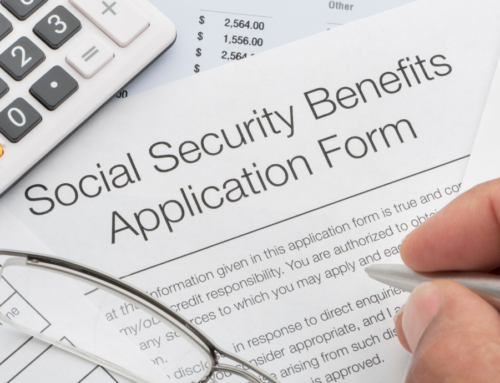
Most people think the Social Security earnings limit is simple: earn too much and benefits shrink. If you work for an employer, that is roughly true, because your paycheck shows exactly what you earned. If you work for yourself, it is not. Your income moves with invoices, expenses and timing, and SSA has a second question that employees never face: how many hours a month are you really working in your own business?
That second question is the 45-hour test. It exists because a self-employed person can reduce reported profit without reducing work, or can run a business that earns little on paper while consuming full days. To prevent that, SSA looks at both money and time. For owners, consultants, professionals and contractors in Puerto Rico who claim benefits before full retirement age, understanding both can protect thousands of dollars.
This guide explains the two tests, the 2026 numbers, how SSA counts self-employed income, and what happens to benefits that are withheld. Three worked examples show the rules in action, and a planning section covers how to decide whether claiming early makes sense. Everything is educational, the figures are for 2026, and your own situation should be confirmed with SSA and a qualified advisor.
The Rule in Plain English
Two tests run side by side. One looks at your annual earnings. The other, which applies to a specific window, looks at each month separately. The 45-hour test lives in the second one.
Test One: The Annual Earnings Limit
Social Security’s rules apply while you receive retirement benefits before your full retirement age. According to SSA’s 2026 publication on how work affects benefits, if you are under full retirement age all year, SSA reduces benefits by $1 for every $2 you earn above $24,480. In the year you reach full retirement age, it withholds $1 for every $3 above $65,160, counting only the months before your birthday month.
Full retirement age is 67 for anyone born in 1960 or later. From the month you reach it, there is no earnings limit and no reduction, no matter how much you earn. A July 2026 guide from Q3 Advisors summarizes the same figures, including the monthly equivalents of $2,040 and $5,430.
Test Two: The Monthly Test and the 45-Hour Rule
In your first year of retirement, SSA can also pay a full benefit for any month in which you are considered retired, regardless of your annual earnings. SSA’s publication explains that for 2026 you are considered retired in a month when your earnings are $2,040 or less. For self-employed people, that is not enough on its own, because hours matter too.
For a self-employed person, SSA’s publication sets the following guide. More than 45 hours a month means you are not retired. Fewer than 15 hours means you are retired. Between 15 and 45 hours, you are retired only if the work does not require much skill and you are not managing a sizable business.
Who This Applies To
The rules apply to people who claim retirement benefits before full retirement age and keep working. If you wait until full retirement age, they do not apply. SSA’s publication does not carve out Puerto Rico, which means the same federal rules apply to residents of the island.
Spouses and children who receive benefits on your record can also be affected, because your earnings can reduce what your family receives. That is another reason to understand the rules before you file.
Read Also: Dual-Qualified Plans: The $22,500 Deferral Cap in Puerto Rico
How SSA Counts Self-Employed Income
For employees, “earnings” means wages. For you, it means something narrower and trickier. Getting the definition right is half of passing the test.
Net Earnings, Not Gross Revenue
SSA’s publication says that only net earnings from self-employment count toward the limits. That means profit after legitimate business expenses, not what you invoiced. A consultant who bills $90,000 and has $30,000 in documented expenses is measured on the profit, not the revenue.
A June 2026 overview from MyState LLC adds that the net figure is reduced further by the self-employment tax deduction, so roughly 92.35% of net profit is what SSA looks at. Treat that as a guide, and confirm the calculation with your tax preparer.
Timing Matters
Self-employment income is generally counted in the year you receive it, not the year you earned it, with exceptions for income tied to work performed before you became entitled to benefits. This can matter when a client pays late or when you bill in December and collect in January.
Do not try to move income around to game the test. SSA can review business records, and the hours test exists precisely because paperwork alone does not show how much you work. Use timing for honest planning, not for avoiding the rule.
Corporations and Owner Salaries
If your business is an S corporation, SSA counts the wages you pay yourself, while distributions are generally not treated as self-employment earnings. That can make the salary you set an important number in your plan. It also has tax and reasonableness requirements, so this is a conversation for your CPA, not a shortcut.
Pensions, investment income and savings withdrawals are different from work income. SSA’s earnings test is about what you earn from working, so retirement plan distributions are not part of it, though they can affect your taxes.
Three Worked Examples
Concrete numbers make the rules easier to remember. Each case is hypothetical and uses 2026 limits, and your actual result depends on your benefit and your records.
Marisol: Under Full Retirement Age All Year
Marisol is 62, runs a design studio and claims benefits of $1,800 a month, or $21,600 for the year. Her net self-employment earnings are $44,480. That is $20,000 above the $24,480 limit, so SSA would withhold $1 for every $2, or $10,000.
She still receives $11,600 for the year. That is a real reduction, but not a loss of everything. And in her first year of benefits, the monthly test could change the picture if she works far fewer hours in some months, which brings us to Carmen.
Carmen: The Month-by-Month Test
Carmen, 63, starts benefits in July after closing most of her practice. She earned strongly in the first half of the year, but from July through December she takes only a few clients, earns about $1,500 a month and works roughly 12 hours a month.
Because her monthly earnings are under $2,040 and her hours are under 15, each of those months can count as a retirement month. She may receive a full benefit for them even if her annual total is above the limit. If she had worked 50 hours a month instead, those months would not qualify, even with the same earnings.
Luis: The Year He Reaches Full Retirement Age
Luis was born in 1959, so he reaches full retirement age, 66 and 10 months for his birth year, in September 2026. Before his birthday month he earns $77,160 in net self-employment income. That is $12,000 above the $65,160 limit, so SSA would withhold $1 for every $3, or $4,000.
After his birthday month, Luis can earn any amount with no reduction. His planning question is not whether to stop working, but how to schedule income so that less of it falls in the months before he reaches full retirement age.
A Quick Worksheet You Can Copy
Before you file, run the numbers in four steps. Estimate your net self-employment profit for the year. Subtract the annual limit that applies to you, $24,480 or $65,160. Divide what is left by two, or by three in the year you reach full retirement age. The result is the most SSA would withhold, which you can compare with the benefit you expect to receive.
Then list the months in which you expect to earn $2,040 or less and work fewer than 15 hours. Those months may be paid in full in your first year. Seeing both numbers on one page often changes the decision more than any rule of thumb.
Withheld Does Not Mean Lost
Many people fear the earnings test because they assume reduced benefits are gone forever. SSA’s publication says otherwise, and understanding this changes how you weigh the decision.
What SSA Does at Full Retirement Age
SSA’s publication states that withheld benefits are not lost. At full retirement age, SSA recalculates your monthly benefit to credit the months in which benefits were withheld. Its own example shows a $910 monthly benefit with 12 months withheld rising to $975 at age 67, in today’s dollars.
The increase is not instant money back, and it is not dollar-for-dollar in the short term. It is a higher monthly benefit for the rest of your life. For people who expect a long retirement, the recalculation can be meaningful.
Who Does Not Get the Increase
SSA notes that spouses and survivors caring for minor or disabled children do not receive this recalculation. If your family receives benefits on your record, the earnings test may reduce their payments without the same recovery. Ask SSA how your own situation works before you assume the adjustment covers everyone.
Keep SSA Informed
SSA bases withholding on your estimate. If your actual 2026 earnings will differ from your estimate, tell SSA promptly so benefits can be adjusted during the year. That avoids overpayments that have to be repaid later, which is a far more stressful way to learn about the test.
If you receive disability benefits or SSI, you must report all earnings, and different rules apply. Do not apply the retirement guidance in this article to those programs.
Planning Choices for Self-Employed Owners
The earnings test is not an obstacle to avoid. It is one input into a larger decision about when to claim, how much to work and how to pay for the years ahead.
Decide Whether to Claim Early at All
Claiming before full retirement age generally reduces your monthly benefit for life, in addition to the earnings test. For someone who plans to keep working, the combination can make early claiming less attractive. For someone who truly needs the income, it may still be right.
A written comparison of claiming ages, with your actual benefit estimates from SSA, is far more useful than a general rule. Thoughtful retirement planning in Puerto Rico work starts with those numbers and with your expected work schedule.
Match Hours, Income and Your Plans
If you intend to wind down, plan the winding down. Reducing to fewer than 15 hours a month can help in the monthly test, but only if it is real. If you want to keep working full time, consider waiting to claim, or timing your claim near the year you reach full retirement age.
For owners with employees, the picture is different, because managing a business can make even modest hours count. A good personal and business consultant in Puerto Rico will ask how much of your work is truly hands-on and how much could move to staff or a successor.
Coordinate Taxes and Savings
Your earnings affect Social Security, but they also affect your taxes, health coverage and retirement plan choices. Net income depends on deductions you choose, and some strategies reduce current tax while changing how SSA sees your income. That is why tax planning in Puerto Rico should be reviewed together with your claiming plan.
Comprehensive financial planning services in Puerto Rico can pull these pieces together: benefit timing, retirement plan withdrawals, business income and legacy goals, so each decision supports the others.
Build a Realistic Timeline
Winding down a business rarely happens in one month. Clients need notice, staff need direction and income tapers. Sketch a two-to-three-year timeline that shows when your hours fall, when you plan to claim and when you reach full retirement age. If the timeline and the claiming date do not line up, you will see it on paper before SSA sees it in your records.
Protect the Income You Still Depend On
Delaying or reducing benefits means your own work income carries more weight. If you could not work for several months, the gap would be real. Individual coverage such as disability insurance in Puerto Rico can replace part of that income, and it is worth pricing while you are healthy.
For many self-employed households, the biggest risk is not the earnings test at all. It is a year in which the business owner cannot work and no one else can step in.
Mistakes to Avoid
Most errors with the test come from assumptions. A short checklist can prevent the most common ones.
Common Assumptions That Cost Money
These assumptions show up again and again among self-employed claimants.
- Assuming only wages count and ignoring net self-employment profit.
- Assuming you can work as many hours as you like if profit is low.
- Forgetting the earnings test stops at full retirement age.
- Failing to update SSA when your income changes during the year.
- Ignoring the effect on a spouse or child receiving benefits on your record.
The Documentation Habit
Keep simple records of the hours you work, your clients, your invoices and your expenses. A monthly log takes minutes and can support your case if SSA asks how you qualified for a month. This is the practical side of a test that depends on facts.
When to Ask for Help
If your income varies a lot, if you have an S corporation or if you manage staff, ask SSA or an advisor before you file. Rules for the monthly test and substantial services have details that a general article cannot cover, so a short consultation can prevent a long correction.
Read Also: Hired Staff? What Happens to Your Solo 401(k)
Conclusion
The 45-hour test is easy to overlook and expensive to misunderstand. For self-employed people who claim Social Security before full retirement age, benefits depend on two things at once: how much net income the business earns and how many hours you actually work. The annual limit for 2026 is $24,480, rising to $65,160 in the year you reach full retirement age.
The good news is that withheld benefits are generally not lost, and there are practical ways to plan around the rules. Know your benefit estimate, track your hours, treat your income honestly and compare claiming ages before you file. Review the plan each year, because your work and your needs will change.
Disclaimer: This article is for educational purposes only and does not constitute individualized tax, legal, insurance, investment or financial advice. Social Security rules and limits change, examples are hypothetical, and your benefit depends on your own record. Confirm your options with the Social Security Administration and a licensed advisor before acting.