Self-employed professionals and small business owners in Puerto Rico often assume their retirement savings options stop at a traditional or Roth IRA. For high-earning, unincorporated businesses, that assumption leaves a substantial amount of tax-advantaged savings capacity unused every single year. A Keogh plan may offer substantial retirement-saving capacity for certain self-employed professionals and business owners in Puerto Rico, even though it’s less commonly discussed than a SEP-IRA or Solo 401(k).
What a Keogh Plan Actually is?
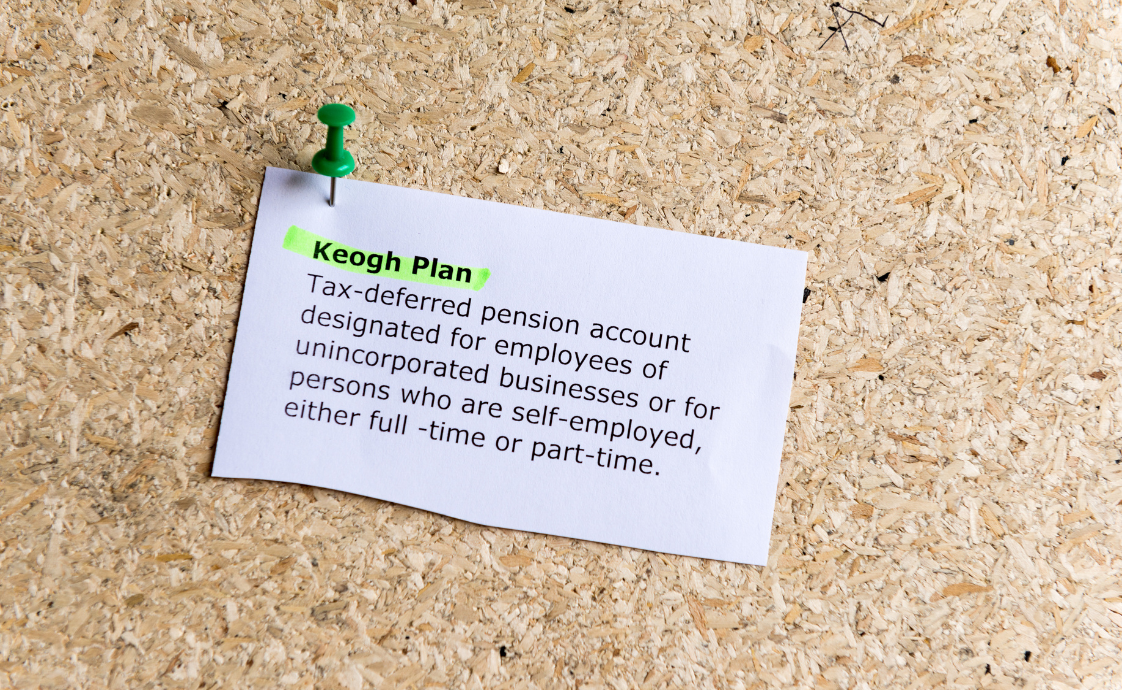
A Keogh plan, also known as an HR-10 plan, is a traditional term for a qualified retirement plan that covers self-employed individuals. Depending on its design, it may operate as a defined-contribution or defined-benefit plan. Named after the New York congressman who helped pass the Self-Employed Individuals Tax Retirement Act of 1962, the structure predates most of the retirement vehicles small business owners use today, and it still offers contribution capacity that few alternatives can match, according to this 2026 Keogh plan overview.
Two Main Keogh Structures
A Keogh plan generally takes one of two forms, and the right choice depends heavily on income stability and how aggressively an owner wants to save:
- A defined-contribution Keogh, which works like a profit-sharing plan and allows contributions to vary year to year based on business performance
- A defined-benefit Keogh, which guarantees a set annual retirement benefit and generally requires consistent funding regardless of how the business performs in a given year
Read Also: Overlooked Topics Puerto Rico Clients Ask Advisors About
The 2026 Contribution Limits Puerto Rico Business Owners Should Know
Puerto Rico’s Treasury Department publishes its own qualified retirement plan limits each year, and for 2026 several of these figures increased meaningfully from 2025. The annual contribution limit for defined-contribution plans rose to $72,000, up from $70,000, the annual compensation limit increased to $360,000, and the annual benefit limit for defined-benefit plans climbed to $290,000, according to this 2026 Puerto Rico retirement plan limits update. For a defined-contribution Keogh specifically, total annual additions are capped at the lesser of 25% of compensation or $72,000, per this 2026 Keogh contribution limits guide.
These figures matter because they define exactly how much a business owner can shelter from current taxation in a single year, and for high-earning self-employed professionals, that gap between a Keogh’s capacity and a standard IRA’s $7,500 limit represents a meaningful difference in long-term retirement savings.
Who Actually Fits a Keogh Plan
Not every self-employed person benefits equally from a Keogh structure, and understanding where it fits, and where it doesn’t, prevents owners from setting up a plan that creates more administrative burden than value.
Strong Candidates for a Keogh
A Keogh plan tends to make the most sense for a specific profile of business owner:
- High-earning self-employed professionals, such as physicians, attorneys, and consultants, who want to shelter significantly more than an IRA allows
- Owners of unincorporated businesses or sole proprietorships with consistent, predictable profits
- Business owners closer to retirement who want to accelerate savings through a defined-benefit structure
- Professionals who can commit to the administrative requirements a Keogh plan involves, including any applicable filings, actuarial work and ongoing plan administration
When a Keogh Isn’t the Right Fit
A Keogh plan can be the wrong choice just as often as it’s the right one. Because the term “Keogh” traditionally refers to a qualified plan covering self-employed individuals, incorporated businesses generally establish the appropriate qualified plan under their corporate structure rather than treating Keogh as a separate plan category. Eligibility and plan design should be confirmed with a retirement-plan administrator and tax professional. Owners with highly variable or unpredictable income may also struggle with a defined-benefit Keogh’s funding requirements, since these plans generally demand consistent contributions regardless of a slow year.
Keogh vs SEP-IRA vs Solo 401(k): How to Choose
The three vehicles overlap in purpose but differ meaningfully in structure and flexibility. A SEP-IRA offers simpler administration with no annual filing requirement and flexible year-to-year contributions, making it a strong fit for a business owner who prioritizes simplicity over maximum contribution capacity. A Solo 401(k) allows higher combined contribution limits for an owner with no employees other than a spouse and includes a loan provision many owners find valuable. A Keogh plan, particularly in its defined-benefit form, can allow contributions well beyond what either alternative permits, but it comes with meaningfully more administrative complexity, including the annual actuarial calculations a defined-benefit structure requires.
Tax Advantages That Make a Keogh Worth the Complexity
Beyond the higher contribution ceiling, a Keogh plan offers the same core tax benefits that make qualified retirement plans attractive in the first place: contributions reduce current taxable income dollar for dollar, and investment growth inside the plan compounds tax-deferred until withdrawal. For a high-earning self-employed professional in a top tax bracket, making a larger eligible contribution may reduce current taxable income while increasing retirement savings.
A Simple Way to Think About the Tradeoff
Comparing a Keogh to simpler alternatives usually comes down to a single question worth asking honestly:
- Does the additional contribution capacity save enough in current taxes and future retirement income to justify the added administrative cost and complexity?
- For owners who prioritize simpler administration or have less predictable income, a SEP-IRA or Solo 401(k) may be more practical.
- For consistently high earners looking to catch up on retirement savings later in their career, the answer often favors a Keogh, particularly the defined-benefit version
Read Also: Group Benefits Packages for Puerto Rico Small Business Owners
Common Mistakes Business Owners Make With Keogh Plans
Owners who set up a Keogh without professional guidance frequently make one of a few predictable errors. Some establish a defined-benefit Keogh during a strong year without accounting for the mandatory funding obligations that continue even after income drops. Others overlook filing, actuarial or administrative requirements that may apply based on the plan’s structure and size, potentially exposing the business to penalties or correction costs and some set up the plan correctly but never revisit it as the business grows, missing opportunities to adjust contributions as income and goals change over time.
Setting Up and Maintaining a Keogh Plan
Establishing a Keogh plan requires more upfront work than opening a SEP-IRA, generally involving a formal plan document, IRS filings, and, for a defined-benefit structure, an actuary to determine required contribution levels. Retirement planning services in Puerto Rico that specialize in these structures can help an owner determine whether the additional contribution capacity justifies the added administrative cost, since the answer depends heavily on income level, business stability, and how many years remain until the owner plans to retire.
Coordinating a Keogh With the Rest of Your Financial Plan
A Keogh plan shouldn’t be evaluated in isolation from the rest of an owner’s financial picture. A tax planning advisor can model how a Keogh contribution interacts with other deductions, current-year cash flow needs, and any other small business retirement plans in Puerto Rico the owner might also be using, since stacking a Keogh with a spousal IRA or a taxable investment account often produces a more efficient overall savings strategy than relying on any single vehicle alone. Coordinating this decision as part of broader financial planning for business owners in Puerto Rico also ensures the plan structure still makes sense as the business grows, adds employees, or eventually changes its corporate structure.
What a Typical Keogh Timeline Looks Like
Owners considering a Keogh plan for the first time often want a sense of how the process actually unfolds. A defined-contribution Keogh can typically be established and funded within the same tax year with proper planning, while a defined-benefit Keogh requires more lead time to complete the actuarial work before contribution amounts can be finalized. Most owners work with both a retirement plan administrator and a tax advisor simultaneously, since the plan design decision and the tax strategy behind it are made together, not sequentially.
Making the Right Call for Your Situation
A Keogh plan isn’t the right choice for every self-employed professional in Puerto Rico, but for the right owner, high income, consistent profits, and a genuine desire to save aggressively for retirement, it remains a plan that may provide substantial retirement-saving capacity when its costs, obligations, and design fit the owner’s circumstances. The administrative complexity that scares many owners away is manageable with the right guidance, and for a business owner sheltering tens of thousands of dollars more per year than an IRA would allow, that complexity is often well worth the tradeoff.
JLA Financial Planning helps self-employed professionals and small business owners across Puerto Rico determine whether a Keogh plan, or another retirement structure, best fits their income and goals.