


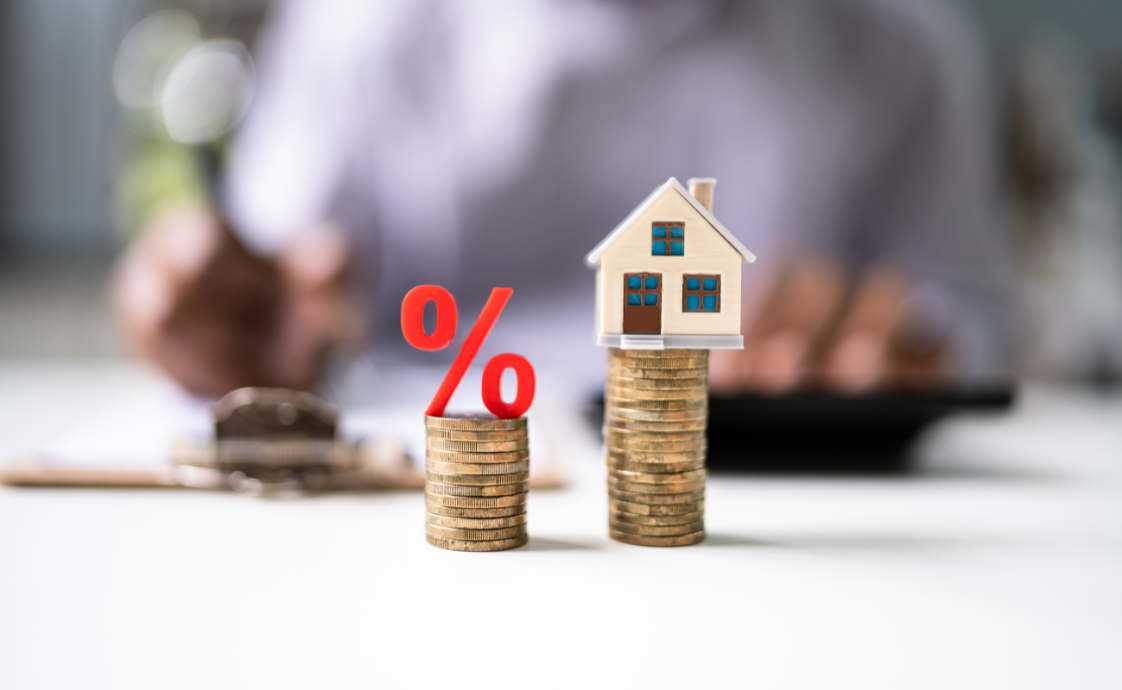
Puerto Rico homeowners watching mortgage rate headlines over the past year have good reason to pay attention. The 30-year fixed-rate mortgage averaged 6.69% as of early August 2026, its highest level in nearly a year and up from 6.63% at the same point in 2025, according to this 2026 Freddie Mac Primary Mortgage Market Survey. For homeowners with an existing fixed-rate loan, that number matters less directly. For anyone buying, refinancing, or carrying a variable-rate mortgage, it matters enormously.
What Today’s Rate Actually Costs in Real Dollars
Interest rates can feel abstract until they’re translated into an actual monthly payment. On a $200,000 loan, a 6% interest rate costs roughly $1,199 per month in principal and interest, compared to just $955 per month at a 4% rate, according to this 2026 mortgage rate analysis. That $244 monthly difference, roughly $2,928 per year, adds up to real money over the life of a 30-year loan, which is exactly why the rate environment deserves attention even for homeowners not currently in the market to buy or refinance.
Why Even Small Rate Differences Matter
A handful of factors amplify how much a rate change actually affects a homeowner’s finances:
- The loan amount, since rate differences compound more dramatically on larger mortgages
- The remaining loan term, since a longer remaining term means more years paying the higher rate
- Whether the loan is fixed or adjustable, since adjustable-rate mortgages reprice as market rates move
- Local property values, since Puerto Rico’s housing market has its own supply and demand dynamics independent of mainland trends
Should You Refinance in Today’s Rate Environment?
Refinancing makes sense for a specific set of homeowners, not everyone with an existing mortgage. Financial guidance generally suggests refinancing becomes worthwhile when a new rate comes in meaningfully lower, often a full percentage point or more, than the existing rate, since closing costs need to be recovered through monthly savings before the refinance actually pays off. Getting even one additional rate quote from a second lender saves borrowers roughly $600 over the life of a loan on average, and shopping three lenders can push that savings closer to $1,200, according to this 2026 mortgage rate comparison guide.
When Refinancing Tends to Make Sense
A few specific situations tend to justify the cost and effort of refinancing:
- Switching from an adjustable-rate mortgage to a fixed rate to lock in payment stability before rates move again
- Shortening the loan term from 30 years to 15 years while the payment difference remains manageable
- Accessing home equity through a cash-out refinance for a specific, planned purpose rather than general spending
How Rising Rates Affect Puerto Rico’s Housing Market Specifically
Puerto Rico’s housing market operates with its own local dynamics, including property tax treatment, hurricane-related insurance considerations, and a mix of local and mainland lenders offering conventional, FHA, VA, and USDA loan programs. Rising rates tend to cool buyer demand generally, which can moderate home price growth even as monthly payments become more expensive for new buyers, a dynamic playing out nationally in 2026 as listing prices run modestly below year-ago levels in many markets, according to this 2026 mortgage rate market update.
Read Also: Best Index Funds for Puerto Rico Investors in 2026
Protecting Your Home Budget as Rates Stay Elevated
For homeowners not planning to move or refinance, the rate environment still deserves a seat in the broader household budget conversation. Property insurance in Puerto Rico costs, property tax obligations, and general maintenance expenses continue rising alongside broader inflation, and a homeowner who hasn’t reviewed their overall housing costs recently may be carrying more risk, or more expense, than necessary. Reviewing coverage limits, deductibles, and whether current best property insurance in Puerto Rico options still represent the best value is worth doing on a similar schedule to any mortgage rate check, not just after a claim.
The Pre-Payment Question Rising Rates Bring Up
Higher rates change the math on an old question: does it make sense to pay down a mortgage faster than required? At today’s elevated rates, extra principal payments effectively earn a guaranteed return equal to the mortgage’s interest rate, which for many homeowners now exceeds what a conservative savings account or bond fund would pay. Running the numbers through a mortgage pre payment calculator before committing to an accelerated payoff schedule helps confirm whether the strategy genuinely makes sense given the homeowner’s specific rate, remaining balance, and other financial priorities, since pre payment penalty on mortgage in Puerto Rico provisions vary by lender and loan type and need to be checked before making extra payments a habit.
Building a Homeownership Plan That Accounts for Rate Volatility
Interest rates have moved meaningfully over the past few years, and nothing about the current environment guarantees stability going forward. A financial planning process in Puerto Rico that treats the mortgage as one piece of a broader financial picture, rather than a fixed cost nobody revisits, positions homeowners to act quickly when refinancing genuinely makes sense and to avoid unnecessary moves when it doesn’t. Asset protection planning in Puerto Rico also deserves a look for homeowners with meaningful equity built up, since a home often represents a significant share of a family’s net worth and merits the same protective planning given to any major asset.
Why Rates Moved This Much in the First Place
Understanding why mortgage rates climbed helps homeowners judge whether today’s elevated environment is likely temporary or the new normal for the foreseeable future. Mortgage rates closely track long-term government bond yields, which rose as investors reacted to inflation concerns and geopolitical uncertainty through much of 2026. The 30-year rate briefly dipped below 6% in late February before climbing back above it, illustrating just how quickly this environment can shift in either direction based on economic data and global events largely outside any individual homeowner’s control.
What Tends to Move Rates in Either Direction
A handful of forces consistently influence where mortgage rates head next:
- Federal Reserve policy decisions and signals about future interest rate moves
- Inflation reports, since persistent inflation tends to keep rates elevated for longer
- Broader economic and geopolitical events that shift investor demand for government bonds
- Employment data, since a cooling labor market often precedes rate relief
What Puerto Rico Buyers Should Know About Loan Programs
Puerto Rico homebuyers have access to the same range of federal loan programs available on the mainland, though local lenders often layer in island-specific expertise that matters during underwriting. Conventional conforming loans, FHA loans with lower down payment requirements, VA loans for eligible veterans, and USDA loans for qualifying rural and suburban areas all remain available through both local institutions and mainland lenders operating on the island. Comparing offers across at least a few lenders remains one of the simplest, highest-value steps a buyer or refinancer can take regardless of which loan program fits their situation.
Read Also: Which is Better for PR Residents: Roth IRA vs. Traditional IRA?
Adjustable-Rate Mortgages Deserve Special Attention Right Now
Homeowners carrying an adjustable-rate mortgage face a different calculation than those with a fixed rate, since an ARM’s rate resets periodically based on current market conditions. In a rate environment like today’s, where the 30-year fixed rate sits near 6.7%, a homeowner whose ARM is approaching its adjustment period should model what the new rate is likely to mean for their monthly payment well before the reset happens, rather than being surprised by it. Refinancing into a fixed rate before an unfavorable adjustment often costs less in the long run than waiting to see what the reset actually brings.
Making Informed Decisions in a Higher-Rate Environment
Rising interest rates don’t affect every homeowner the same way, and the right response depends heavily on individual circumstances: whether a loan is fixed or adjustable, how much home equity exists, and what other financial goals compete for the same monthly budget. Understanding the real numbers behind today’s rate environment, rather than reacting to headlines alone, gives Puerto Rico homeowners a clearer path to decisions that actually improve their financial position.
Disclaimer: This article is for educational purposes only and does not constitute individualized financial, tax, or legal advice. Consult a licensed professional regarding your specific circumstances.

