A rule that was originally supposed to take effect in 2024 finally became real on January 1, 2026, after the IRS delayed it twice because retirement plan recordkeepers, including the TSP’s own administrators, said they simply weren’t ready to implement the wage-verification and automatic-redirection systems it requires. For federal employees age 50 and older earning above a specific wage threshold, this delay is over, and the rule now governs exactly how catch-up contributions get made for the rest of this year and beyond.
What the Rule Actually Requires
Before getting into who it affects and how to plan around it, the mechanics themselves deserve a clear, direct explanation.
The Core Requirement
Federal employees who are 50 or older and whose prior-year FICA wages, the Social Security wage figure reported in Box 3 of their W-2, exceeded $150,000 must direct all of their 2026 catch-up contributions to the Roth side of the TSP rather than the Traditional side. This requirement affects only the catch-up portion of contributions; the standard $24,500 regular contribution limit for 2026 can still be directed to Traditional, Roth, or any combination an employee chooses, according to the guide to TSP changes for federal employees.
Why “Hard Cliff” Is the Right Way to Think About This
This rule doesn’t phase in gradually the way many tax provisions do. One dollar of prior-year wages over the $150,000 threshold triggers the full requirement for the entire catch-up amount, not just the portion above the line. There’s no partial application and no proration based on how far over the threshold an employee’s wages happened to land, according to this 2026 analysis of the TSP Roth catch-up rule.
How the $150,000 Threshold Actually Gets Measured
Getting this detail wrong is one of the most common sources of confusion, since the threshold doesn’t work quite the way most people initially assume.
It’s Last Year’s Wages, Not This Year’s
The relevant figure is the employee’s FICA wages from the prior calendar year, meaning 2026 catch-up contributions are governed by 2025 W-2 Box 3 earnings, not a projection or estimate of current-year income. An employee whose income crosses the threshold for the first time in 2026 itself won’t be affected by the mandatory Roth requirement until 2027, since the rule always looks backward one full year rather than applying in real time.
A Detail That Exempts Some New Hires Entirely
Employees hired partway through a year, or who move between positions with significantly different pay, can end up in genuinely different situations depending on exactly how their wages were structured the prior year. Someone hired mid-year whose partial-year federal wages stayed below $150,000, even if their annualized salary would have exceeded it, is generally not subject to the requirement for the following year, since the rule looks at actual reported wages rather than an annualized projection, according to the explanation of mandatory Roth catch-up mechanics.
Read Also: How to Create a Retirement Paycheck From Your Investments
Why This Rule Only Affects Catch-Up, Never Regular Contributions
A point worth stating explicitly, since it’s easy to lose track of amid the threshold and timing details already covered, is exactly where this rule’s reach stops.
The Boundary That Protects the Bulk of a High Earner’s Savings
Even an employee with wages well above the $150,000 threshold keeps full freedom to direct their entire standard $24,500 contribution to Traditional TSP if they choose, since the mandatory Roth requirement touches only the catch-up layer that applies after that regular limit is reached. For most affected employees, the catch-up portion represents a meaningful but still minority share of their total annual contribution, which is worth keeping in perspective when weighing how significant this change actually is to an overall tax strategy.
Why the FERS Supplement Doesn’t Count Toward This Threshold
A detail worth understanding specifically because it trips up retirees transitioning out of full-time federal employment involves how this rule treats income that isn’t a traditional paycheck.
A Distinction Worth Keeping Straight
The FERS Special Retirement Supplement, paid to certain retirees between their Minimum Retirement Age and age 62, is subject to its own separate earnings test but is not treated as FICA wages for purposes of calculating the $150,000 threshold under this rule. A retiree receiving the Supplement alongside part-time consulting income, for example, needs to evaluate the threshold based on actual wage income specifically, not the combined total of every income source landing in their bank account that year.
What This Actually Costs the Employees It Affects
Understanding the real financial impact, rather than treating this as an abstract administrative change, clarifies why this rule deserves genuine planning attention rather than a passive “the payroll system will handle it” assumption.
Losing a Deduction, Not Losing the Ability to Save
The practical effect isn’t a reduction in how much a high-earning employee can contribute; the $8,000 standard catch-up limit, or $11,250 for those in the 60-to-63 super catch-up window, remains fully available. What changes is the tax treatment: money that previously reduced current-year taxable income as a Traditional contribution now goes in after-tax instead, meaning the employee pays income tax now on that specific portion rather than deferring it until withdrawal in retirement.
A Few Planning Adjustments Worth Making
A handful of practical steps help an affected employee adjust smoothly rather than being surprised by the change mid-year:
- Reviewing current-year tax withholding or estimated payments to account for the loss of what was previously a pre-tax deduction on the catch-up portion specifically
- Confirming that the employing agency’s payroll system has correctly identified an employee’s affected status, since the switch to Roth happens automatically once the regular contribution limit is reached, but errors in wage reporting can still occur
- Recognizing that the long-term tradeoff, paying tax now in exchange for tax-free growth and withdrawals later, can still work out favorably for someone who expects a similar or higher tax bracket throughout retirement
How This Compares to the Private-Sector Version of the Same Rule
Federal employees aren’t singled out by this provision; understanding that the same rule applies broadly across nearly every type of employer helps clarify that this is a change to federal tax law itself, not a federal-employee-specific policy.
The Same Threshold Applies Across Employer Types
SECURE 2.0’s mandatory Roth catch-up provision applies identically to private-sector 401(k) plans, nonprofit 403(b) plans, and the TSP, all governed by the same $150,000 prior-year wage threshold and the same hard-cliff mechanics. A federal employee moving between a private-sector position and a federal one mid-career doesn’t encounter a fundamentally different rule at the new employer, since this is a provision of the Internal Revenue Code that governs qualified retirement plans broadly rather than a TSP-specific administrative policy.
Why a Married Couple Needs to Check This Separately for Each Spouse
A detail that catches households off guard involves how this rule treats two working spouses, particularly when only one of them actually crosses the threshold.
The Threshold Applies Per Employee, Not Per Household
This rule is evaluated against each individual employee’s own prior-year wages from their own employer, not a married couple’s combined household income. A federal employee earning $120,000 married to a spouse earning $200,000 in a non-federal job isn’t subject to the mandatory Roth requirement on their own TSP catch-up contributions, since the threshold looks only at that individual employee’s own wages from their own employer, regardless of how much combined household income might otherwise suggest. Each spouse in a dual-income household needs to check their own eligibility independently rather than assuming a household income figure determines the outcome for either person’s retirement account.
Why This Matters Differently for Puerto Rico’s Federal Workforce
The rule itself applies identically to every affected federal employee regardless of duty station, but a Puerto Rico-based employee benefits from layering a few additional considerations onto the standard analysis.
Coordinating a Federal Rule With a Local Tax Picture
A federal employee retirement in Puerto Rico review that accounts for this rule alongside the island’s own separate tax treatment of retirement contributions tends to catch interactions a federal-only analysis would miss entirely:
- Reviewing how the loss of a Traditional deduction on catch-up contributions affects a household’s overall tax picture, not just the federal return, since Puerto Rico’s own planilla obligations remain separate from the TSP’s federal rules
- Confirming whether a spouse’s income, if also federal, independently crosses the same threshold, since the rule applies on a per-employee basis rather than a combined household basis
- Working with retirement planning services in Puerto Rico that track this kind of federal rule change proactively, rather than discovering the impact only after a paycheck already reflects the new withholding
How This Rule Interacts With the Enhanced Super Catch-Up
Employees in the narrow age 60-to-63 window face a specific wrinkle worth addressing directly, since the enhanced contribution limit available at this age doesn’t change how this income-based requirement applies.
The Super Catch-Up Doesn’t Create an Exception
Workers turning 60, 61, 62, or 63 during a given calendar year qualify for an enhanced catch-up contribution of $11,250 for 2026, rather than the standard $8,000 available to everyone else 50 and older. This larger figure doesn’t change whether the Roth requirement applies; an employee in this age bracket whose prior-year wages exceeded $150,000 must direct the entire $11,250 super catch-up to Roth, not just the portion that would have applied under the standard $8,000 limit. The two provisions, the enhanced catch-up amount and the mandatory Roth requirement, operate entirely independently of each other and simply stack together for anyone who happens to qualify for both.
Why This Rule Exists in the First Place
Understanding the policy reasoning behind this specific change helps explain why it was written this way rather than as a more gradual adjustment.
The Revenue Rationale Behind the Roth Requirement
This provision originated in SECURE 2.0 as a revenue-raising measure: shifting high earners’ catch-up contributions from pre-tax to after-tax treatment increases federal tax revenue in the near term, since the government collects income tax on that contribution immediately rather than waiting decades for it at withdrawal. This is also exactly why the rule targets catch-up contributions specifically, a relatively narrow slice of total retirement contributions, rather than restructuring the tax treatment of retirement savings more broadly, and why it applies only above a specific income threshold rather than universally.
Why the Original Timeline Fell Apart
The rule was originally scheduled to take effect in 2024, but the IRS granted a two-year administrative transition period after plan recordkeepers, the TSP included, reported that their payroll and contribution-processing systems genuinely weren’t ready to implement the wage-threshold determination and automatic Roth redirection this rule requires. That delay is exactly why 2026, not 2024, is the first year this requirement actually governs a federal employee’s paycheck, and it’s worth understanding this history specifically because some older online content still describes rules and effective dates that reflect the original, since-delayed timeline rather than the one actually in force now.
How Roth In-Plan Conversions Interact With This Requirement
A related 2026 change affects how an employee might respond to losing the Traditional catch-up option, and understanding the connection between the two provisions matters for anyone trying to optimize their overall TSP strategy.
A New Option That Arrived Around the Same Time
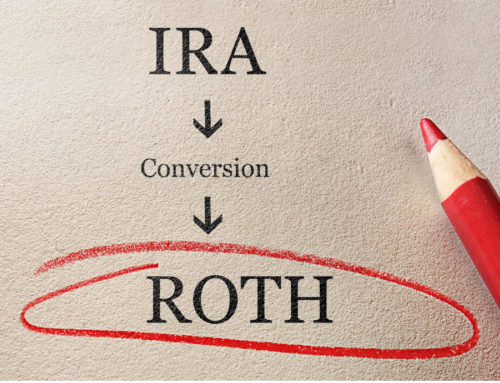
Starting January 28, 2026, TSP participants gained the ability to convert existing Traditional balances to Roth through an in-plan conversion, without needing to roll funds out to an external IRA first. While this conversion option is mechanically separate from the mandatory Roth catch-up requirement, both changes push a high-earning federal employee’s overall TSP balance further toward Roth treatment over time, and an employee thinking strategically about their long-term tax diversification between Traditional and Roth balances benefits from considering both provisions together rather than evaluating the mandatory catch-up rule in isolation from the broader conversion option now available.
What to Do If the Payroll System Gets This Wrong
Automated systems handle most of this correctly, but an employee bears the ultimate responsibility for confirming their own contributions were coded properly, since a payroll error here can create a real compliance problem rather than a minor inconvenience.
Why Catching an Error Early Matters
An employee who believes their wages fell below the $150,000 threshold but still sees catch-up contributions being redirected to Roth, or conversely, someone above the threshold whose catch-up contributions are still flowing to Traditional, should raise the discrepancy with their agency’s payroll or benefits office immediately rather than assuming the system is correct by default. A Traditional catch-up contribution made in violation of this rule can create downstream correction issues that are considerably more complicated to unwind after the fact than catching and fixing a misclassification within the same pay period it occurred.
Read Also: Does the TSP Rule of 55 Apply If You Live in Puerto Rico?
Whether This Rule Changes Which Investment Funds to Choose
A question that comes up naturally once catch-up contributions shift to Roth involves whether the underlying investment allocation inside the TSP should change as a result, and the honest answer is that this rule and the investment decision are genuinely separate questions.
Tax Treatment and Fund Selection Are Independent Decisions
Whether a contribution lands in the Traditional or Roth side of a TSP account determines how and when it gets taxed; it has no bearing on which of the TSP’s core funds, G, F, C, S, or I, that contribution should actually be invested in once it arrives. An employee affected by the mandatory Roth catch-up rule doesn’t need to reconsider their overall investment strategy simply because the tax treatment of one specific contribution stream changed; the same allocation principles that applied before this rule took effect, matched to the employee’s actual time horizon and risk tolerance, still apply afterward. Conflating these two separate decisions, tax treatment and investment allocation, is a common but avoidable source of confusion once an employee starts seeing Roth designations appear on contributions that used to go into Traditional.
Making the Adjustment Deliberately Rather Than Reactively
A federal employee who learns about this rule only when a paycheck changes unexpectedly is reacting to a decision that could have been planned for months in advance. Understanding exactly how the $150,000 threshold gets measured, why it applies as a hard cliff rather than a gradual phase-in, and how it interacts with other income sources like the FERS Supplement turns a confusing payroll surprise into a change that’s been accounted for well before it actually affects a paycheck.
Disclaimer: This article is for educational purposes only and does not constitute individualized financial, tax, or legal advice. Consult a licensed professional regarding your specific circumstances.